Xi'an Le-Nutra Ingredients Inc is one of the most professional manufacturers and suppliers of activated charcoal powder in China, featured by quality products and low price. Please rest assured to wholesale bulk activated charcoal powder for sale here from our factory. Customized orders are welcome.
Activated Charcoal Powder for Industrial Purification and Adsorption Applications
Activated Charcoal Powder, also known as Powdered Activated Carbon (PAC), is a fine black carbon material with a highly porous structure and strong adsorption capacity. It helps remove unwanted colors, odors, organic compounds, and other impurities from liquids and process streams.
Our Activated Charcoal Powder is designed for commercial and industrial applications that require reliable adsorption performance and consistent material quality. The product can be manufactured from different carbon-rich raw materials, including coconut shells, wood, and coal. The final properties depend on the raw material, activation process, and required application.

The production process generally includes carbonization, activation, cooling, grinding, and particle-size classification. Steam activation or chemical activation develops the internal pore structure and creates active adsorption sites. Additional washing and purification steps can help control ash and inorganic impurities for specific grades.
As a B2B ingredient supplier, Xi'an Le-Nutra Ingredients Inc. focuses on bulk raw material supply and international business cooperation. We can discuss product specifications, technical documents, samples, and customized requirements according to the buyer's application.
What Makes Our Powdered Activated Carbon Suitable for Industrial Applications?
- Different Carbon-Rich Raw Material Options
The raw material plays an important role in determining the pore structure, ash content, density, and adsorption behavior of activated carbon.
Coconut shell-based carbon: Generally offers a hard carbon structure and a high proportion of micropores. It is commonly used in applications requiring adsorption of smaller molecules.
Wood-based carbon: Often provides a more developed mesoporous structure and good liquid-phase decolorization performance.
Coal-based carbon: Offers flexible pore characteristics and is widely used in water treatment and industrial purification.

-
Steam Activation and Chemical Activation
Activation creates the porous structure that gives powdered activated carbon its adsorption properties.
Steam activation uses high temperatures and steam to develop pores within carbonized materials. Chemical activation uses activating agents, such as phosphoric acid, to promote pore development. The selected process affects pore distribution, surface chemistry, yield, and final product properties.
-
Controlled Particle Size and Powder Fineness
Particle size affects dispersion, contact efficiency, adsorption speed, and filtration behavior. Fine PAC particles provide a large contact area and can support rapid adsorption in liquid-phase processes.
Common commercial specifications include 100 mesh, 200 mesh, and 325 mesh. Custom particle-size distributions can be discussed according to the buyer's equipment and production requirements.
-
Adsorption Capacity and Pore Structure
The adsorption performance of Activated Charcoal Powder depends on its iodine value, methylene blue value, specific surface area, and pore-size distribution.
Iodine value is commonly used to evaluate adsorption capacity associated mainly with smaller pores. Methylene blue value provides information about adsorption of larger molecules. These indicators should be evaluated together rather than used independently to select a PAC grade.
-
Low Ash and Purification Options
Ash content and inorganic impurities can influence product suitability, especially in food processing, pharmaceutical manufacturing, and high-purity liquid purification. Washing and purification processes can help reduce these impurities. Buyers should confirm the actual heavy metal and ash specifications before selecting a grade.
Activated Charcoal Powder Technical Specifications
|
Parameter |
Typical Specification |
|---|---|
|
Product Name |
Activated Charcoal Powder |
|
Alternative Name |
Powdered Activated Carbon (PAC) |
|
CAS Number |
7440-44-0 |
|
Appearance |
Fine black powder |
|
Raw Material |
Coconut shell, wood or coal |
|
Iodine Value |
600–1100 mg/g |
|
Methylene Blue Value |
120–280 mg/g |
|
Specific Surface Area |
700–1400 m²/g |
|
Particle Size |
100–325 mesh |
|
Moisture |
≤10% |
|
Ash Content |
≤10% |
|
pH Value |
5–9 |
|
Bulk Density |
220–450 g/L |
|
Heavy Metals |
According to selected grade |
|
Microbiological Limits |
According to intended application |
|
Solubility |
Insoluble in water |
Key Adsorption and Purification Properties of Activated Charcoal Powder
Color Adsorption and Decolorization
Activated Charcoal Powder helps remove pigments and unwanted coloring compounds from liquids. Its porous structure provides adsorption sites for various organic color molecules. This property makes PAC useful in sugar refining, edible oil purification, syrup processing, and other liquid decolorization processes.
Organic Impurity Adsorption
Powdered activated carbon can adsorb various organic compounds from liquid systems. Its adsorption efficiency depends on molecular size, carbon pore structure, pH, temperature, and contact time. Manufacturers can select a suitable grade according to the target impurities.
Odor and Taste Compound Removal
Activated Charcoal Powder helps reduce certain odor-causing and undesirable taste compounds in process liquids. This makes it useful in selected food and beverage purification processes. Actual performance depends on the chemical properties of the target compounds and the treatment conditions.
Surface Adsorption and Purification
The porous structure and surface characteristics of activated carbon support the adsorption of selected dissolved substances. Different pore sizes accommodate different molecular sizes, which is why iodine value and methylene blue value are both important when evaluating PAC.
Process Purification and Adsorption Efficiency
Fine PAC particles provide a large contact area and can be dispersed into liquid systems for batch treatment. This allows manufacturers to adjust the carbon dosage and contact time according to the impurity concentration and required treatment results.
Commercial Applications of Powdered Activated Carbon Across Industries
Food and Beverage Processing
PAC helps remove unwanted pigments, odors, and selected organic impurities during food and beverage processing. Common applications include sugar syrup decolorization, edible oil purification, beverage clarification, and food ingredient processing.
For these applications, buyers should select a suitable food-processing grade and verify the applicable food-contact or processing-aid requirements in the destination market.
 Water and Wastewater Treatment
Powdered Activated Carbon is added to water treatment systems to adsorb certain dissolved organic contaminants, taste and odor compounds, and other target substances. Its fine particle size supports rapid contact with water during treatment.
It is used in municipal water treatment, industrial wastewater treatment, and process water purification.
Pharmaceutical and Fine Chemical Processing
Selected high-purity activated carbon grades are used to decolorize and purify pharmaceutical intermediates and fine chemical solutions. Low ash content and controlled inorganic impurities are important considerations for these applications.
Buyers should verify the relevant pharmacopeial, process, and regulatory requirements before purchasing.
Edible Oil and Sugar Refining
Wood-based and other suitable powdered activated carbon grades can help remove pigments and selected organic compounds from edible oils, sugar solutions, and syrups. Their pore structure and adsorption capacity influence decolorization efficiency.
Cosmetics and Personal Care Formulations
Cosmetic-grade activated charcoal powder is used as a black functional ingredient in selected cleansing and personal care products. It can contribute to the adsorption of surface oils and impurities in rinse-off formulations.
Typical applications include facial cleansers, cleansing masks, soaps, and body care products. Cosmetic buyers should request the relevant purity, heavy metal, particle size, and safety documentation.
Industrial Liquid Purification
PAC can be used in selected chemical, textile, and manufacturing processes to remove unwanted colors and organic impurities from process liquids. Grade selection should consider adsorption capacity, particle size, filtration equipment, and the chemical properties of the liquid.
Activated Charcoal Powder Manufacturing and Quality Control
Controlled Carbonization and Activation Process
The manufacturing process directly affects the pore structure and adsorption properties of activated carbon.
Raw materials undergo carbonization to remove volatile substances and form a carbon-rich structure. The carbonized material then undergoes steam or chemical activation to develop the required pores. Grinding and classification help achieve the target particle-size distribution.
For specialized applications, additional washing and purification steps can help reduce ash and inorganic impurities.
Adsorption Performance Testing and Batch Consistency
Each product grade should be evaluated against its agreed technical specifications. Key indicators include iodine value, methylene blue value, specific surface area, moisture, ash, and particle size.
Batch-to-batch comparison helps buyers assess product consistency and determine whether the material performs reliably in their production process.
COA, TDS, SDS and Quality Documentation
Technical documentation helps buyers evaluate product quality before placing bulk orders.
Depending on the selected grade and availability, the supplier can provide:
COA: Batch-specific analytical results.
TDS: Product specifications and physical properties.
SDS/MSDS: Safety, handling, and storage information.
Heavy metal test reports: Where applicable.
Microbiological reports: For grades requiring microbiological control.
Relevant quality and compliance certificates: Subject to actual certification status.
Application-Based Quality Evaluation
Different industries require different quality indicators. A water treatment buyer may prioritize adsorption capacity and particle size, while a food-processing buyer may focus more on ash, heavy metals, and regulatory compliance.
We recommend evaluating a sample under the buyer's actual processing conditions before confirming a long-term supply specification.
Bulk Powdered Activated Carbon Supply and Customized Specifications
Bulk Orders and Wholesale Supply
We support B2B inquiries for bulk Activated Charcoal Powder and long-term raw material cooperation. Buyers can provide their target specifications, application, and estimated purchasing volume to receive a suitable product recommendation and quotation.
For repeat orders, maintaining an agreed specification helps improve purchasing efficiency and batch consistency.
Customized PAC Specifications
Powdered Activated Carbon requirements vary across industries. We can discuss customized requirements based on product availability and production capabilities.
Possible customization parameters include:
Raw material type.
Iodine value.
Methylene blue value.
Particle size and mesh.
Moisture and ash content.
pH value.
Washing and purification requirements.
Packaging specifications.
Sample Testing and Technical Support
Product samples allow buyers to evaluate adsorption performance, dispersion, filtration, and compatibility with their existing processes.
Before requesting a sample, buyers should share their intended application and target specifications. This helps identify a more suitable PAC grade and reduces unnecessary testing.
International Shipping and Export Support
For internatonal B2B orders, shipping arrangements can be discussed according to destination country, order quantity, packaging, and delivery requirements.
Available trade terms can include EXW, FOB, CFR, and CIF, subject to the actual order and shipping arrangements.
Export documentation can be prepared according to the destination market and transaction requirements.
Frequently Asked Questions About Activated Charcoal Powder
What Is the Difference Between Activated Charcoal Powder and Powdered Activated Carbon?
Activated Charcoal Powder and Powdered Activated Carbon generally refer to the same type of finely ground porous carbon adsorbent. PAC is the common abbreviation for Powdered Activated Carbon. The exact product properties depend on its raw material, activation process, and grade.
What Is the Difference Between Coconut Shell, Wood-Based, and Coal-Based Activated Carbon?
The main difference lies in their pore structure, hardness, ash content, and adsorption characteristics.
Coconut shell activated carbon generally has a hard structure and a high proportion of micropores. Wood-based activated carbon often has more mesopores and is widely used for liquid-phase decolorization. Coal-based activated carbon offers different pore structures depending on the coal type and activation process.
The best option depends on the target substances and operating conditions.
What Iodine Value Is Suitable for Powdered Activated Carbon?
Common commercial PAC grades have iodine values ranging from approximately 600 to 1100 mg/g. However, a higher iodine value does not automatically mean better performance in every application.
For liquid decolorization, methylene blue value and pore-size distribution may also be important. Buyers should evaluate the target impurities and actual processing conditions before selecting a grade.
What Is the Difference Between Powdered Activated Carbon and Granular Activated Carbon?
Powdered activated carbon has a smaller particle size and provides rapid contact with liquid systems. It is commonly used in batch treatment and liquid purification.
Granular activated carbon has larger particles and is suitable for fixed-bed filtration systems, where water or gas passes through a carbon bed.
The choice depends on the equipment, contact time, filtration method, and operating conditions.
What Is the Typical Particle Size of PAC Powder?
Common commercial particle sizes include 100 mesh, 200 mesh, and 325 mesh. The appropriate size depends on the required adsorption rate, dispersion behavior, and filtration equipment.
Custom particle-size specifications may be available depending on the product grade.
Is Activated Charcoal Powder Water-Soluble?
No. Activated Charcoal Powder is generally insoluble in water. It disperses as fine suspended particles and can be separated from the liquid through filtration or other solid-liquid separation processes.
Can Activated Charcoal Powder Be Used in Food and Pharmaceutical Applications?
Yes, selected grades can be used in certain food-processing and pharmaceutical purification applications. However, not every industrial PAC grade is suitable for these uses.
Buyers should confirm the raw material, purity, heavy metal limits, applicable standards, and regulatory status in the destination market before placing an order.
Can You Provide a COA and TDS for Activated Charcoal Powder?
A COA and TDS can be requested for product evaluation. The COA should show the relevant batch test results, while the TDS provides the product's technical specifications and recommended handling information.
Additional safety and compliance documents depend on the selected grade and available testing records.
What Is the MOQ for Bulk Powdered Activated Carbon?
MOQ depends on the selected raw material, product grade, particle size, packaging, and order requirements. Buyers can share their target quantity to confirm the available purchasing options.
Can I Request a Sample Before Placing a Bulk Order?
Yes. Samples can be discussed for preliminary testing. We recommend sharing your application, target iodine value, methylene blue value, and particle size before requesting a sample.
This helps ensure that the selected sample matches your production requirements.
How Should Activated Charcoal Powder Be Stored?
Store it in a cool, dry, and well-ventilated area. Keep the original packaging sealed and protect the powder from moisture, contamination, and strong odors.
Can You Supply Activated Charcoal Powder to International Buyers?
International supply arrangements can be discussed according to product grade, order quantity, destination, and shipping requirements. Buyers can request product specifications, COA, SDS, samples, and a quotation before confirming an order.
Our Packages

Our Factory

Our Logistics

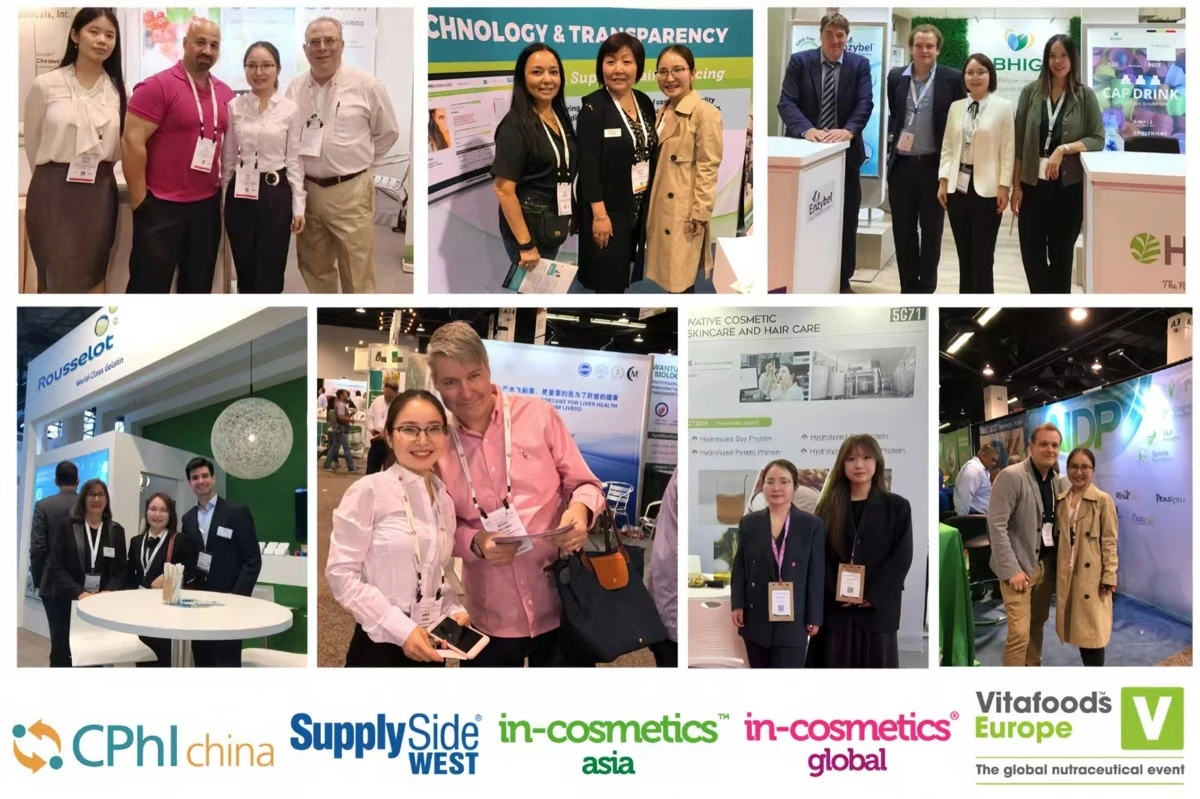
Our Exhibition
Our Certificates

Hot Tags: Activated Charcoal Powder, China Activated Charcoal Powder manufacturers, suppliers, factory, Coenzyme Q10 Bulk, potassium dihydrophosphate, L Arabinose L Arabinose, L Rhamnose Monohydrate, Hydrolysed Potato Protein Powder, White Bean Extract