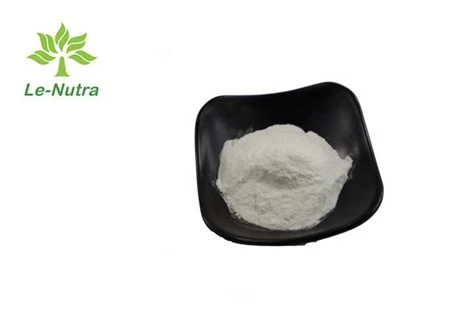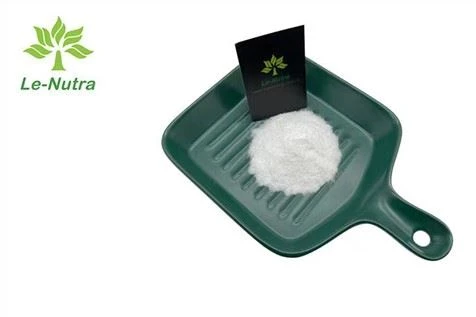

Xi'an Le-Nutra Ingredients Inc is one of the most professional manufacturers and suppliers of white peony root powder in China, featured by quality products and low price. Please rest assured to wholesale bulk white peony root powder for sale here from our factory. Customized orders are welcome.
Product Introduction
 White Peony Root is the dried root of Paeonia lactiflora Pall. It has a long history of use in China, Japan, and Korea for pain relief and inflammation support. The root's main active marker is paeoniflorin, a monoterpenoid glycoside.
Our White Peony Root Powder comes from cultivated Paeonia lactiflora roots. We dry and mill them into a fine powder while preserving the natural paeoniflorin content. This Paeonia Lactiflora Extract Powder gives formulators a standardized level of the active compound, batch after batch.
The flavor is mild and slightly bitter. It works well in capsules, tablets, and powder blends.
Why Choose Us?
We produce White Peony Root Powder in China with a focus on paeoniflorin consistency. The root is harvested from cultivated Paeonia lactiflora fields, not wild-collected. We control the drying temperature to protect the paeoniflorin content-high heat degrades the compound.
Every batch ships with a Certificate of Analysis. We test paeoniflorin content by HPLC so you know the exact marker level before the powder enters your production. We also screen for heavy metals, microbiology, and moisture.
I have seen White Peony Root Powder from other suppliers vary wildly in color and paeoniflorin content. Some batches come in with a greenish tint, which usually means the drying went wrong. Our powder stays a consistent light tan to pale brown. When a customer tells me their capsule fill weight works perfectly because the powder flows the same way every time, that is the feedback that confirms the process.
Technical Data Sheet
| Item | Specification |
|---|---|
| Product Name | White Peony Root Powder / Paeonia Lactiflora Extract Powder |
| Botanical Source | Paeonia lactiflora Pall. |
| Part Used | Root |
| Appearance | Light tan to pale brown fine powder |
| Odor & Taste | Mild, slightly bitter, characteristic |
| Paeoniflorin Content (HPLC) | ≥ 20% (standardized) |
| Extract Ratio | 10:1 (5:1, 20:1 available) |
| Extraction Solvent | Water / Ethanol |
| Identification | TLC |
| Particle Size | 95% pass 80 mesh |
| Solubility | Partially soluble in water |
| pH | 5.0–7.0 |
| Moisture | ≤ 8.0% |
| Ash | ≤ 8.0% |
| Lead (Pb) | ≤ 2.0 mg/kg |
| Arsenic (As) | ≤ 1.0 mg/kg |
| Mercury (Hg) | ≤ 0.1 mg/kg |
| Total Plate Count | ≤ 10,000 cfu/g |
| Yeast & Mold | ≤ 1,000 cfu/g |
| E. coli | Negative |
| Salmonella | Negative |
| Storage | Cool, dry place away from light |
| Shelf Life | 24 months |
| Packaging | 25kg/drum with double PE liner |
Product Benefits
- Standardized Paeoniflorin Content
This is the core feature. Paeoniflorin is the primary bioactive marker in White Peony Root. We standardize this White Peony Root Powder to a consistent paeoniflorin level, so your formulation gets a predictable dose. Research on Paeonia Lactiflora Extract often cites paeoniflorin as the key component behind its reported activities.
- Anti-Inflammatory Support
Studies on baishao extract show dose-dependent inhibition of cAMP-phosphodiesterase activity, which researchers link to its anti-inflammatory effects. Paeoniflorin specifically has been shown to suppress inflammatory mediators in multiple experimental models. Formulators use this Paeonia Lactiflora Extract Powder in products targeting joint comfort and inflammatory balance.

- Antioxidant Activity
Paeoniflorin demonstrates protective effects against oxidative stress. Research on osteoblasts showed that paeoniflorin reduced mitochondrial dysfunction and reactive oxygen species release. This supports positioning around cellular protection.
- Skin Care Potential
Recent studies indicate paeoniflorin from White Peony Root Powder inhibits melanogenesis by regulating melanin-related signal transduction. A patent application describes white peony root extract for anti-UV radiation and anti-aging applications. These findings open doors for skin care formulations.
- Mild and Well-Tolerated
A clinical safety study on peony root extract tablets in healthy volunteers found no drug-related side effects. Vital signs and laboratory data stayed within normal ranges. This supports the ingredient's suitability for oral and topical products.
Product Application
Dietary Supplements
White Peony Root Powder is a staple in traditional herbal capsule and tablet formulas. Paeoniflorin's reported anti-inflammatory and immunoregulatory effects support its use in joint health, women's wellness, and general inflammation support products.
 Women's Health
In traditional Chinese medicine, baishao is used for gynecological conditions including irregular menses and blood deficiency. Modern formulators incorporate White Peony Root Powder into women's wellness supplements based on this traditional use.
Skin Care and Cosmetics
The emerging research on paeoniflorin's melanogenesis inhibition and anti-UV potential makes this White Peony Root Powder suitable for brightening serums, anti-aging creams, and sun care products.
Functional Foods and Beverages
The mild, slightly bitter taste of white peony root works in herbal teas, tonics, and functional beverage blends. It pairs well with other traditional botanicals.
Pain and Discomfort Support
Peony root is classified in Japan as an analgesic and antispasmodic agent. Formulators use Paeonia Lactiflora Extract in products targeting occasional discomfort and muscle tension.
Frequently Asked Questions
Q: What is the difference between White Peony Root and Red Peony Root?
A: They come from the same plant species but different processing methods. White Peony Root (Baishao) is the root with the bark removed and boiled. Red Peony Root (Chishao) is dried with the bark intact. They have different traditional uses and chemical profiles.
Q: What is the paeoniflorin content in your powder?
A: Our standard specification is ≥ 2.0% paeoniflorin by HPLC. Higher concentrations are available. We report the exact value on the Certificate of Analysis for each batch.
Q: Is paeoniflorin water-soluble?
A: Paeoniflorin itself is soluble in water. The whole White Peony Root Powder disperses in water but does not form a clear solution because of the fiber and starch content.
Q: What is the recommended dosage?
A: Dosage depends on your formulation and target paeoniflorin level. For capsules, typical use ranges from 250–500 mg per serving. We can advise based on your specifications.
Q: Can I use this in skin care products?
A: Yes. Research supports paeoniflorin's potential for skin brightening and anti-aging. The powder disperses well in water-based and emulsion systems.
Q: Are there any safety concerns?
A: A clinical study on peony root extract tablets found no drug-related side effects in healthy volunteers. As with any botanical ingredient, formulators should follow appropriate usage levels.
Q: Can you provide samples?
A: Yes. We send 50–100g samples with a Certificate of Analysis. The sample is free; you cover shipping.
Our Packages

Our Factory

Our Logistics

Our Certificates

Our Exhibition

Contact Us
To explore how our Hydrolysed Rice Peptide can enhance your products, contact us at info@lenutra.com, aimee@lenutra.com
Hot Tags: white peony root powder, China white peony root powder manufacturers, suppliers, factory, Bacopin Extract, Diindolylmethane Powder, Hawthorn Extract Powder, Macleaya Cordata Extract, Monk Fruit Mogroside V, sclareol powder