

Hydrolyzed soy protein, derived from soybean through enzymatic or chemical breakdown, is widely used in food, cosmetic, and agricultural industries due to its functional properties, with solubility being a key factor. Solubility determines its applicability in liquid formulations, bioavailability, and interaction with other ingredients. Among various factors influencing solubility, pH stands out as a critical variable, as it modulates the charge properties and molecular interactions of the protein.
Hydrolyzed Soy Protein Solubility
To understand how pH affects solubility, it is essential to first grasp the structural characteristics of hydrolyzed soy protein. Native soy protein is a complex of globulins, but hydrolysis breaks peptide bonds, producing smaller peptides with varying molecular weights, typically ranging from a few hundred to several thousand Daltons. This breakdown exposes functional groups such as amino (-NH2), carboxyl (-COOH), and hydrophobic residues that were previously buried in the native protein structure.
Solubility in aqueous solutions depends on the balance between hydrophilic and hydrophobic interactions. Hydrophilic groups (like -NH2 and -COOH) interact with water molecules through hydrogen bonding and dipole interactions, promoting dispersion. In contrast, hydrophobic residues tend to aggregate to minimize contact with water, reducing solubility. The net effect of these interactions determines whether the protein remains dissolved or precipitates.
Notably, the functional groups exposed during hydrolysis are ionizable, meaning their charge state changes with pH. Amino groups accept protons in acidic conditions, becoming positively charged (-NH3+), while carboxyl groups donate protons in alkaline conditions, becoming negatively charged (-COO-). This charge variability is central to how pH influences solubility, as charge affects both intermolecular forces and interactions with the solvent.
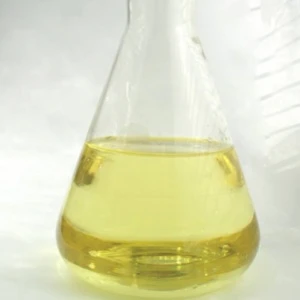
Before examining pH-specific effects, it is important to note that the hydrolysis degree also impacts baseline solubility. Generally, higher hydrolysis (more extensive peptide bond cleavage) increases solubility due to smaller molecular size and greater exposure of hydrophilic groups. However, even highly hydrolyzed samples show pH-dependent solubility, highlighting the overriding role of pH in modulating this property.
With this structural foundation in mind, we can now explore how pH shifts alter these charge states and, consequently, solubility.
pH-Dependent Charge Effects and Solubility Dynamics
The primary mechanism by which pH influences hydrolyzed soy protein solubility is through its effect on the net charge of the peptide molecules. This relationship is best understood in the context of the isoelectric point (pI), the pH at which a molecule carries no net electrical charge.
At the PI, the number of positively charged groups (-NH3+) equals the number of negatively charged groups (-COO-), resulting in a neutral net charge. Without electrostatic repulsion to counteract hydrophobic interactions, peptide molecules tend to aggregate. This aggregation reduces the surface area available for interaction with water, leading to decreased solubility. For hydrolyzed soy protein, the pI typically ranges between 4.0 and 5.0, depending on the hydrolysis method and peptide composition. Thus, near this pH range, solubility is at its minimum.
When the pH deviates from the pI, either becoming more acidic (pH < pI) or more alkaline (pH > pI), the net charge of the peptides changes, profoundly affecting solubility. In acidic conditions, excess protons in the solution protonate carboxyl groups, reducing their negative charge, while amino groups remain protonated, resulting in a net positive charge. This positive charge creates electrostatic repulsion between peptide molecules, preventing aggregation and enhancing solubility. Similarly, in alkaline conditions, hydroxyl ions deprotonate amino groups, reducing their positive charge, while carboxyl groups become more negatively charged, leading to a net negative charge. Again, electrostatic repulsion inhibits aggregation, increasing solubility compared to the pI.
The magnitude of solubility changes with pH depends on the peptide composition. For example, peptides rich in acidic amino acids (e.g., aspartic acid, glutamic acid) will have a lower pI and show more significant solubility increases in alkaline conditions, while those with more basic amino acids (e.g., lysine, arginine) will have a higher pI and respond more strongly to acidic pH shifts. It is also worth noting that extreme pH values (e.g., pH < 2 or pH > 12) may cause secondary effects, such as peptide degradation or denaturation, which can reduce solubility despite the strong net charge. However, within typical industrial pH ranges (3–10), the charge-dependent solubility pattern dominated by the pI remains consistent.
Understanding these dynamics provides a basis for optimizing solubility in practical applications, where pH control is often a key strategy.
Practical Industrial Applications
The pH-solubility relationship of hydrolyzed soy protein has significant implications for its industrial use, guiding formulation strategies across sectors. In food processing, for instance, soy oligopeptides are used as a flavor enhancer, emulsifier, or nutritional supplement in products ranging from beverages to sauces. Beverages, which often have pH values between 3.0 (e.g., citrus drinks) and 7.0 (e.g., milk-based drinks), require high solubility to avoid sedimentation. Manufacturers can adjust the product pH to avoid the pI range (4.0–5.0) of the soy peptide used, ensuring clarity and stability. For example, a fruit juice with a pH of 3.5 would be well-suited for incorporating hydrolyzed soy protein, as its positive net charge at this pH prevents aggregation.
In cosmetic formulations, such as lotions and serums, hydrolyzed soy protein is valued for its moisturizing and film-forming properties. These products typically have pH values between 4.5 and 6.5 to match the skin's natural acidity. To prevent precipitation, formulators may select soy oligopeptides with a pI outside this range or adjust the pH slightly. For instance, using a soy peptide with a pI of 4.0 would minimize solubility issues in a lotion with a pH of 5.0, as the slight alkaline shift from the pI induces a negative charge and enhances dispersion.
Agricultural applications, such as foliar fertilizers, also rely on solubility to ensure even distribution and plant uptake. Hydrolyzed soy protein-based fertilizers are often formulated in aqueous solutions with pH adjusted to 6.0–7.5, a range that avoids the pI and ensures the protein remains dissolved for effective absorption by plants.
Beyond direct pH adjustment, other factors can be combined with pH control to optimize solubility. For example, adding salts (e.g., sodium chloride) can screen charges, reducing electrostatic repulsion and potentially lowering solubility, but this effect can be countered by adjusting pH further from the pI. Similarly, temperature influences solubility-higher temperatures generally increase solubility, but this is most effective when combined with pH conditions that favor charge repulsion.
To determine the optimal pH for a specific application, solubility assays are commonly performed. These involve measuring the concentration of dissolved soy peptide across a range of pH values, using methods such as centrifugation (to separate insoluble fractions) followed by protein quantification (e.g., Bradford assay or UV spectroscopy). The resulting solubility curve identifies the pH range where solubility is maximized, guiding formulation decisions.
Hydrolyzed Soy Protein Supplier
PH exerts a profound influence on soy oligopeptides' solubility through its effect on molecular charge, with the isoelectric point marking the minimum solubility. By understanding and controlling pH, industries can optimize the functionality of soy peptides in various applications. For high-quality hydrolyzed proteins with consistent solubility profiles, consider Le-Nutra: a trusted hydrolyzed soy protein supplier with 10 years of experience in the natural ingredients industry. Le-Nutra's products meet stringent standards, holding certificates including COA, TDS, Allergen, Non-GMO, Kosher and ISO9001. Sourced from Glycine max(L.) Merr., they are available in specifications of 95%, 98%, and 99%. For more information or to place an order, please contact us at info@lenutra.com.
References:
- Chen, L., & Zhang, H. (2020). Effects of pH and hydrolysis degree on the solubility and functional properties of soy protein hydrolysates. Journal of Food Science and Technology, 57(3), 890–898.
- Wang, Y., et al. (2018). Charge-dependent solubility of peptide fractions from enzymatic hydrolysis of soy protein. Food Chemistry, 244, 321–327.
- Smith, A. J., & Johnson, R. K. (2019). Practical guide to pH optimization for protein solubility in industrial formulations. Industrial Biotechnology, 15(2), 98–105.
- Garcia, M., et al. (2021). Isoelectric point variability in hydrolyzed plant proteins: Implications for solubility. Journal of Agricultural and Food Chemistry, 69(12), 3542–3550.







