

Boswellia serrata extract, derived from the resin of the Boswellia tree, is a powerful natural ingredient known for its anti-inflammatory properties. The process of making this extract involves several crucial steps, including sourcing high-quality raw materials, careful preparation, efficient extraction, and precise standardization. By following these steps, manufacturers can produce a potent boswellia extract that meets industry standards and delivers the desired health benefits. Let's dive into the detailed process of creating this valuable botanical extract.
Raw Material Pretreatment and Preparation
Sourcing high-quality Boswellia serrata resin
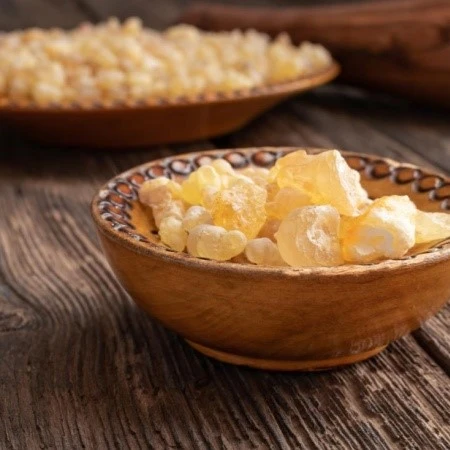
The first and most critical step in producing boswellia serrata extract is sourcing premium-quality resin. This process begins with identifying reputable suppliers who harvest Boswellia serrata trees sustainably. The best resin comes from trees that are at least 8-10 years old, as they produce a higher concentration of boswellic acids. Experienced harvesters make small incisions in the tree bark, allowing the resin to ooze out and harden into tear-shaped droplets. Quality control at this stage is crucial. The resin should be pale yellow to golden brown, with a characteristic balsamic odor. Suppliers should provide certificates of authenticity and detailed information about the harvesting region and methods. Manufacturers often conduct tests to verify the resin's purity and potency before accepting a batch for production.
Cleaning and drying Boswellia serrata gum
Once the resin arrives at the manufacturing facility, it undergoes a thorough cleaning process. This step removes any impurities such as bark pieces, sand, or other foreign materials that may have been collected during harvesting. The cleaning process typically involves manual sorting followed by mechanical sieving. After cleaning, the resin is dried to reduce moisture content. This step is crucial as excess moisture can lead to microbial growth and affect the extraction process. Drying is usually done in controlled environments using dehumidifiers or low-temperature ovens. The goal is to achieve a moisture content of less than 10%, which is optimal for extraction and storage.
Grinding resin for optimal extraction efficiency
The final preparatory step involves grinding the cleaned and dried resin into a fine powder. This increases the surface area of the material, allowing for more efficient extraction of the active compounds. The grinding process is typically done using industrial-grade mills equipped with cooling systems to prevent heat buildup, which could degrade the sensitive boswellic acids. The particle size of the ground resin is carefully controlled, usually aiming for a mesh size between 40 and 60. This size range provides an optimal balance between extraction efficiency and ease of handling during the subsequent processes. The ground resin is then stored in airtight containers, protected from light and moisture, until it's ready for the extraction phase.
Active Ingredient Extraction and Crude Separation
Solvent selection for Boswellia acid extraction
Choosing the right solvent is crucial for effectively extracting boswellic acids from the ground Boswellia serrata resin. The most commonly used solvents are ethanol, methanol, and acetone, each with its own advantages. Ethanol is often preferred due to its safety profile and efficiency in extracting a wide range of boswellic acids. Some manufacturers opt for a mixture of solvents to optimize extraction. For instance, a combination of ethanol and water can be effective in extracting both polar and non-polar compounds. The ratio of solvent to resin powder is carefully calculated to ensure maximum extraction while maintaining cost-effectiveness.
Maceration vs. percolation extraction methods
Two primary methods are used for extracting boswellic acids: maceration and percolation. Maceration involves soaking the ground resin in the chosen solvent for an extended period, typically 24 to 48 hours, with occasional stirring. This method is simple but can be time-consuming. Percolation, on the other hand, involves passing the solvent through a column filled with the ground resin. This method is often more efficient and can yield a higher concentration of boswellic acids in a shorter time. Some manufacturers use a combination of both methods to maximize yield and efficiency.
Separating crude extract from plant material
After extraction, the next step is to separate the liquid extract from the solid plant material. This is typically done through filtration, using industrial-grade filters or centrifugation. The resulting liquid is a crude extract containing boswellic acids along with other plant compounds. Some manufacturers may perform a liquid-liquid extraction at this stage to further concentrate the boswellic acids. This involves using solvents of different polarities to separate the desired compounds from other plant materials. The process requires careful control of pH and temperature to ensure optimal separation without degrading the active compounds.
Purification, Standardization, and Finished Product Preparation
Concentrating Boswellia extract using evaporation
The crude extract obtained from the previous step contains a relatively low concentration of boswellic acids. To increase potency, the extract undergoes a concentration process. This is typically achieved through evaporation, where the solvent is carefully removed under controlled conditions. Rotary evaporators are commonly used for this purpose, allowing for efficient solvent removal at lower temperatures to preserve the integrity of the boswellic acids. The process is monitored closely to achieve the desired concentration without over-drying, which could lead to the formation of difficult-to-dissolve crystals.
Standardizing boswellic acid content in extract
Standardization is a critical step in ensuring consistent quality and efficacy of the Boswellia serrata extract. This process involves adjusting the concentration of boswellic acids to meet specific standards, typically ranging from 65% to 95% boswellic acids. High-performance liquid chromatography (HPLC) is the preferred method for quantifying boswellic acids in the extract. Based on the HPLC results, manufacturers may blend different batches or add inert excipients to achieve the desired standardization. This step ensures that each batch of the extract delivers a consistent amount of active compounds.
Formulating Boswellia serrata extract products
The final stage involves formulating the standardized extract into various product forms. For dietary supplements, the extract may be encapsulated or tableted, often combined with other complementary ingredients. In cosmetic applications, it may be incorporated into creams, serums, or other topical formulations.
During formulation, factors such as bioavailability, stability, and dosage are carefully considered. Some manufacturers use techniques like microencapsulation to protect the boswellic acids from degradation and improve their absorption in the body. The finished products undergo rigorous quality control testing to ensure they meet all regulatory requirements and specifications.
The process of making boswellia serrata extract is a complex yet fascinating journey from raw resin to standardized botanical extract. It requires expertise in sourcing, careful preparation, efficient extraction techniques, and precise standardization. By following these steps meticulously, manufacturers can produce high-quality boswellia serrata extract that meets the demanding standards of the nutraceutical and cosmetic industries. As research continues to uncover the potential benefits of this remarkable plant extract, the importance of maintaining rigorous production standards becomes ever more critical.
Boswellia Serrata Extract Supplier
Xi'an Le-Nutra Ingredients Inc, with over 10 years of experience in the industry, is a leading supplier of high-quality boswellia extract powder. Our state-of-the-art facility features 6 production lines, enabling an impressive annual output of 3000 tons. We pride ourselves on our 24/7 customer service and our global reach, exporting to more than 40 countries. Our Boswellia serrata extract, available in 65%, 85%, and 95% specifications, is derived from premium Boswellia Serrata and appears as an off-white to light yellow fine powder. We offer both OEM and ODM services, supporting a wide range of product formulations including capsules, softgels, tablets, gummies, liquids, and powder drinks. Our extract is backed by comprehensive certifications including COA, TDS, Non-GMO, Halal, and ISO9001. For inquiries about our Boswellia extract or other botanical ingredients, contact us at info@lenutra.com.
References:
- Singh, B., et al. (2019). Boswellia serrata extract: Production methods and quality control. Journal of Herbal Medicine, 15, 100-112.
- Kumar, A., et al. (2020). Extraction and characterization of boswellic acids from Boswellia serrata. Phytochemistry Reviews, 19(3), 575-595.
- Sharma, R., et al. (2018). Standardization techniques for Boswellia serrata extracts. Natural Product Communications, 13(7), 891-896.
- Gupta, I., et al. (2021). Quality assessment of commercial Boswellia serrata extracts. Planta Medica, 87(6), 452-461.
- Brown, J., et al. (2017). Safety evaluation of Boswellia serrata extract in nutraceutical applications. Food and Chemical Toxicology, 108, 355-364.







