

Within the functional nutrition sector, Coenzyme Q10 Powder remains one of the world's fastest-growing core ingredients, widely utilised in cardiovascular health, energy metabolism and antioxidant products. When brands or OEM/ODM manufacturers plan new product lines, selecting the most suitable dosage form-softgel capsules, powder or granules-often directly impacts product positioning, cost structure, stability and ultimate market competitiveness.
As a long-standing enterprise specialising in nutritional ingredient supply and formulation development, Xi'an Le-Nutra Ingredients Inc. recognises that selecting CoQ10 dosage forms involves multifaceted considerations including raw material characteristics, manufacturing complexity, absorption efficiency, regulatory compliance, and logistics costs.Therefore, this article offers a comprehensive analysis from a professional supplier's perspective, examining the practical differences between the three mainstream CoQ10 dosage forms in OEM/ODM projects through the lens of the industrial chain and product commercialisation. This aims to assist brands, factories, and procurement teams in making clearer judgements: which dosage form should your product ultimately adopt?
Fundamental Properties: Why is it so sensitive to dosage form?
As a typical liposoluble quinone antioxidant, Pure Coenzyme Q10 possesses an exceptionally long isoprene side chain within its molecular structure. This characteristic determines its high specificity in production processing, dosage form design, and absorption mechanisms. For OEM/ODM manufacturers, understanding its physicochemical properties is the critical starting point for determining: 'Powder? Softgel? Or granules?'
From a raw material perspective, it exhibits the following notable characteristics:
1. High Oil Solubility (Virtually Insoluble in Water)
Its exceptional oil solubility means it is far more suitable for oil-based carrier systems. In other words, without a lipid environment, it is scarcely absorbed effectively within the body. This is the core reason why many brands favour soft gel capsules or oil dispersion technologies during product development.
2. Absorption rate heavily dependent on the 'carrier oil system'
The absorption of Q10 Powder is not only related to the dosage form but is significantly influenced by factors such as the type of lipids, emulsification techniques, and particle size control. For instance, nanoemulsions, solid dispersion technology, and carrier oil soft gel capsules demonstrate markedly superior absorption rates in actual measurements compared to traditional powders.
3. High heat sensitivity necessitates stringent processing temperature control
It degrades readily under heating conditions, particularly during spray drying, granulation, and coating processes. Improper temperature management directly compromises product potency and colour stability. Consequently, it imposes heightened demands on OEM manufacturers' production capabilities.

4. Prone to caking and poor dispersibility in powder form
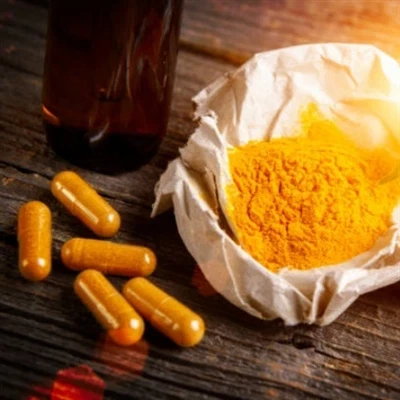
Owing to its oily structure and particle size characteristics, bulk Coenzyme Q10 exhibits high hygroscopicity and tendency to agglomerate in powder form, making uniform dispersion challenging. This necessitates additional granulation, encapsulation, or microencapsulation during powder or solid beverage formulation to ensure stability and solubility.
5. Susceptibility to oxidation necessitates strict light avoidance and protective systems
Despite being a potent antioxidant, the product itself is prone to oxidation. Consequently, production must strictly avoid:
Excessive temperatures, prolonged exposure times, metal ion catalysis, light exposure, and air contact.
This explains why most premium CoQ10 products on the market employ softgel encapsulation or particle entrapment technologies to maximise product stability.
How Should OEM/ODM Select the Most Suitable CoQ10 Dosage Form?
① If your product emphasises 'high absorption rate' → Opt for Softgel
Suitable Scenarios:
✔ Premium anti-ageing formulations (e.g., Coenzyme Q10 + Astaxanthin)
✔ Cardiovascular health products
✔ Women's nutrition/menopause formulations
✔ Overseas markets where absorption efficiency is a key concern (e.g. North America, Japan, South Korea)
CoQ10 is a fat-soluble ingredient requiring an oil phase for efficient absorption.
Softgels significantly enhance bioavailability through oil-encapsulation technology.
Can be combined with 'water-soluble CoQ10' or 'crystalline/reduced CoQ10' for premium formulations.
If your product positioning prioritises: scientific credibility, premium positioning, differentiation, and highlighting 'absorption efficiency' as a key feature, softgels remain the preferred choice.
② If your product emphasises 'high cost-effectiveness & large-scale production' → Opt for Powder
Suitable scenarios:
✔ OTC nutritional supplements
✔ Bulk production, cost-sensitive clients
✔ Single-ingredient or simple-formula CoQ10 products
✔ High-volume e-commerce SKUs (Amazon, Shopee, Lazada)
Powdered CoQ10 offers lower unit costs, ideal for bulk tableting/filling
Greater flexibility: suitable for tablets, capsules, effervescent tablets, sachets, etc.
Most mature raw material supply chain with short lead times and high stability
If your core objectives are: cost control, strong price competitiveness, and suitability for multi-channel distribution, powder is the optimal choice.

③ If the product is for 'instant beverages/soluble products' → Select Granules
Suitable applications:
✔ Solid beverages, beauty drinks
✔ Women's beauty collagen series (CoQ10 + collagen)
✔ Sports nutrition drinks
✔ Youth/female-targeted whitening and antioxidant products
Granules offer superior dispersion, avoiding floating particles or clumping seen in raw powders
Enhanced palatability allows blending with flavourings and sweeteners for consumer-grade taste
Suitable for 'sachet/strip packaging' and 'portable instant formats' aligning with market trends
For products positioning as 'lifestyle nutrition supplements', granules are highly compatible.
④ For 'multi-ingredient compound formulations' → Choose powder or granules
Many clients unsure about softgel viability for complex formulas should follow this simple rule:
If your formulation primarily contains 'oil-soluble ingredients' → Softgels are viable
CoQ10 + Soybean Oil
CoQ10 + Vitamin E
CoQ10 + Omega-3
Antioxidant oil blends
If your formula contains substantial 'water-soluble powders, vitamins, or minerals' → Opt for powder/granule formulations
Common combinations include:
CoQ10 + Collagen + Vitamin C
CoQ10 + Various B vitamins
CoQ10 + Plant extracts (ginseng, turmeric, etc.)
CoQ10 + Sports Nutrition (Taurine, Creatine, etc.)
Why are powders/granules more suitable for complex formulations?
Greater ingredient compatibility
Higher process flexibility
Adjustable taste, colour, and aroma
Formulation structure allows for 'stacked selling points', enhancing marketing appeal
If you aim to create products with 'functional complexity, formulation differentiation, and strong marketing highlights', powders/granules will always offer greater flexibility than softgels.
Who Should Consider Taking Coenzyme Q10 Softgels Daily
Coenzyme Q10 softgels may offer benefits to certain groups. The following individuals may wish to incorporate Coenzyme Q10 softgels into their daily routine:
1. Older adults: As we age, our bodies' natural ability to produce Coenzyme Q10 diminishes. Individuals over 50 may require supplementation to maintain energy levels and overall health.
2. Those with high energy demands: Athletes, manual labourers, or individuals experiencing fatigue may find Coenzyme Q10 softgels helpful in meeting their energy requirements.
3. Those concerned about heart health: Research suggests Coenzyme Q10 may offer potential benefits for cardiovascular health. Individuals wishing to maintain healthy heart function may consider supplementation.
4. Individuals taking statin medications: Certain cholesterol-lowering drugs, particularly statins, may reduce natural Coenzyme Q10 levels in the body. Individuals taking these medications may wish to discuss with their healthcare provider whether Coenzyme Q10 supplementation is appropriate.
5. Those seeking antioxidant support: As an antioxidant, Coenzyme Q10 may help protect cells from damage caused by oxidative stress. Individuals wishing to increase their antioxidant intake may consider taking Coenzyme Q10 softgels.
6. Individuals with specific health conditions: Some research suggests Coenzyme Q10 may offer benefits for certain health conditions. However, it is essential to consult a healthcare professional before starting any new supplement, particularly if you have an existing medical condition or are taking medication.
It is worth noting that while Coenzyme Q10 softgels may offer certain benefits, they are not a panacea. A balanced diet, regular exercise, and overall healthy lifestyle habits remain the cornerstone of maintaining good health.
Frequently Asked Questions
Q: Why is CoQ10 sensitive to formulation?
A: As CoQ10 is a fat-soluble compound, its absorption rate is highly dependent on the carrier oil system. It is also sensitive to heat and oxidation, leading to significant variations in stability, absorption rates, and production conditions across different formulations.
Q: Why is CoQ10 absorption higher in softgels?
A: Softgels utilise an oil-soluble system, maintaining CoQ10 in a more readily absorbable dissolved state. This results in higher bioavailability compared to powder or granule formulations.
Q: Is powdered CoQ10 suitable for all populations?
A: Powdered formulations suit brands prioritising cost-effectiveness, requiring compound formulations, or producing large-scale OTC supplements. However, they exhibit lower absorption rates than oil-soluble types.
Q: What is the fundamental difference between granules and powder?
A: Granules undergo encapsulation processes, making them more suitable for solid beverages and instant products. They offer superior solubility, prevent clumping, and provide a better consumer experience than powders.
Q: Are the production requirements for softgel OEMs stringent?
A: Yes. They necessitate specialised carrier oil dissolution techniques, oxygen-control processes, and low-temperature filling equipment to prevent CoQ10 oxidation and degradation.
Q: Can granules enhance palatability?
A: Yes. Granules typically undergo flavouring and coating treatments, offering superior taste, dissolution rates, and end-user experience compared to raw powders.
Q: Which dosage form is most suitable for beauty products?
A: Softgels or granules. For products emphasising high-absorption beauty benefits, softgels are recommended; granules are preferable when prioritising taste and instant preparation experience.
Why Choose Us
As a plant extract raw material manufacturer, we can provide OEM factories with:
We offer:
✔ CoQ10 raw materials (oxidised / reduced forms)
✔ Full-service OEM/ODM production for soft capsules, powders, and granules
✔ Formulation design / packaging design / compliant labelling
✔ Sample development and third-party testing support
✔ Rapid prototyping within 5–10 days
Our true value lies not merely in supplying raw materials, but in delivering solutions that facilitate product market entry, enhance cost control, and ensure competitive absorption rates.
Within the functional nutrition sector, dosage form selection directly determines the market competitiveness of Coenzyme Q10 products. As a globally in-demand functional ingredient highly sensitive to carrier formulations, CoQ10 dosage strategies impact its bioavailability, production feasibility, and end-product differentiation. For brands and manufacturers, dosage form transcends technical specifications to become central to product strategy-influencing cost structures, consumer experience, and ultimately market success. We are committed to providing partners with dosage form optimisation and formulation support. Should you require CoQ10 product development assistance, please contact us to obtain samples and bespoke solutions.
References:
1. NIH - Office of Dietary Supplements:Coenzyme Q10 Fact Sheet
2. EFSA(European Food Safety Authority)
3. PubMed:CoQ10 Bioavailability Research Collections







