

In the fiercely competitive global skincare market for brightening and lightening, "Niacinamide" and "Vitamin C" have become standard staples rather than core differentiators. As consumer awareness of skincare needs evolves from simple "spot reduction" to "biological defence" and "photoaging repair", brands urgently require an ingredient capable of supporting premium narratives while offering differentiated technological barriers to stand out.
Acetyl Hexapeptide-1-this cutting-edge ingredient hailed as an 'intelligent biomimetic peptide'-is rapidly emerging as the 'secret weapon' in premium anti-ageing and brightening formulations. Unlike traditional approaches that inhibit enzyme activity or block transport pathways, it heralds a new era of 'biological regulation'. Not only does it precisely intervene in the initial signals of melanin production, but its exceptional DNA repair and photoprotective functions also demonstrate significant commercial premium potential within the B2B supply chain. For brands seeking product innovation, understanding its fundamental differences from traditional ingredients is key to mastering the discourse of next-generation efficacy skincare.
Current Situation: The 'Involution' and Pain Points of the Whitening 1.0 Era
Before delving into acetyl hexapeptide-1, let us first examine how our familiar 'old friends' operate. Traditional skin-brightening ingredients largely adhere to the principle of 'brute-force interruption':
• Inhibiting the Factory (Tyrosinase): Arbutin, kojic acid, and various botanical extracts attempt to halt the melanin production process within the skin.
• Intercepting Transport (Transport Inhibition): Niacinamide acts like a traffic cop, preventing melanin granules from migrating from the basal layer to the epidermis.
• Forceful Removal (Exfoliation): AHA, BHA, which accelerate metabolism to directly 'scrape away' melanin.
Where lies the problem?
While effective, these methods carry risks of skin sensitivity (e.g., stinging from high-concentration VC), stability issues (e.g., Kojic acid's tendency to discolour), and limitations due to single-pathway approaches. Crucially, most operate as 'after-the-fact treatments,' overlooking the skin's fundamental defence mechanisms.
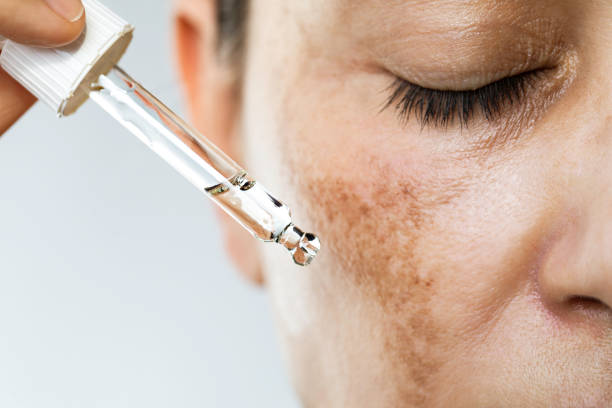
The "Biological Regulation" Logic of Acetyl Hexapeptide-1
Acetyl Hexapeptide-1 (commonly marketed as Melitane™) is not an ingredient that achieves brightening effects through "forceful suppression". Its design philosophy aligns more closely with the skin's own physiological logic-participating in the skin's natural response to ultraviolet radiation and pigment formation through biomimetic signal modulation.
Within our skin resides a natural signalling molecule called melanocyte-stimulating hormone (α-MSH). When skin is exposed to UV radiation, α-MSH binds to the MC1-R receptor on melanocytes, triggering a series of defensive responses. These include melanin production and self-protective mechanisms associated with photodamage. Acetyl Hexapeptide-1 is a bio-inspired peptide engineered precisely to mimic this mechanism. Structurally and functionally modelled after α-MSH's signalling properties, it selectively engages this pathway.

Unlike traditional whitening agents that directly inhibit tyrosinase and block melanin synthesis, Hexapeptide-1 functions more like a "guide" directing melanocyte responses. Rather than pursuing rapid pigment reduction, it assists the skin in establishing a more orderly and stable melanogenesis state, minimising disordered pigment deposition. This comprehensively enhances skin tone uniformity and translucency. This explains why, in practical applications, it is more commonly utilised in "brightening" and "even-toning" formulations rather than those emphasising instant bleaching effects.
Of particular note, the MC1-R signalling pathway is not solely involved in pigment production but also participates in the skin's stress and repair responses following UV exposure. By mimicking this pathway, Melitane Peptide 98% helps support the skin's inherent defence system, reducing the risk of cumulative damage from sun exposure. This approach of 'working with the skin's mechanisms' lends itself to long-term use in sunscreen synergistic formulations, post-sun repair products, and brightening solutions for sensitive skin.
Fundamentally, it does not "bleach the skin" but rather assists the skin in rationally managing pigment production and photoprotective responses. Precisely because of this gentle, biomimetic action pathway, it has gradually become a representative peptide ingredient in high-end functional skincare, positioned for skin tone management and brightening.
Why Do Premium Brands Prefer It?
Based on our direct client engagements, this peptide's value extends beyond mere efficacy. Crucially, it aligns with the prevailing trend towards 'gentle yet effective skincare' while offering a clear, consumer-understandable technical rationale.
For brands, it represents an ingredient that can articulate scientific principles without risking safety or regulatory compliance issues. Simultaneously, it creates differentiation from traditional whitening approaches, aiding in building distinctiveness and premium pricing power.
Commercial Premium: What Can It Bring to Your Product?
For brands and independent retailers, Acetyl Hexapeptide-1 transcends being merely an ingredient; it embodies a premium marketing narrative:
1. Evolving from 'Whitening' to 'Photoimmunity'
Today's consumers fear darkening, but dread 'photoaging' even more. By reducing erythema and protecting DNA, it offers 'biological defence' for suncare products. This allows you to promote your sunscreen not only as a UV blocker but also as a cellular repair agent.
2. A 'Gentle Brightening' Solution for Post-Medical Aesthetics
Many potent whitening ingredients are contraindicated after laser treatments or chemical peels. Yet Melitane, with its exceptional biocompatibility, emerges as an ideal brightening alternative in post-procedure repair lines, helping prevent post-inflammatory hyperpigmentation (PIH).
3. Unparalleled Stability Reduces After-Sales Costs
As a formulator, I dread customer complaints about products turning yellow or developing off-odours. As a synthetic short peptide, it demonstrates remarkable stability within complex formulations (e.g., lotions, ampoules), significantly extending product shelf life.
FAQ
Q1. Can Acetyl Hexapeptide-1 completely replace traditional brightening ingredients?
A: It is generally not recommended to replace them entirely. It is more suitable for long-term, gentle brightening and skin tone management formulations. In practical applications, it is often combined with ingredients such as niacinamide and antioxidants to balance immediate results with long-term, stable effects.
Q2. Is Melitane's whitening speed slower than traditional ingredients?
A: Perceptibly, it does not pursue rapid whitening. Instead, it gradually improves skin tone evenness and translucency by regulating skin signals, making it more suitable for products emphasising long-term usage experience.
Q3. Is it suitable for sensitive skin formulations?
A: As it does not rely on potent enzyme inhibition mechanisms, it is generally more compatible with sensitive skin formulations when used appropriately. Consequently, it is frequently incorporated into brightening products for sensitive skin or post-aesthetic treatment recovery formulations.
Q4. Does it impair the skin's natural sun protection capabilities?
A: No. It does not inhibit melanin production itself but rather modulates related signalling pathways, thereby helping maintain the skin's rational response to UV stimulation.
Q5. Is it a "bleaching" ingredient?
A: No. It emphasises achieving an even, luminous and stable complexion rather than altering the skin's natural tone.
Q6. Can Hexapeptide-1 be used concurrently with niacinamide?
A: Yes. In formulations, they are frequently combined to establish a "signalling regulation + metabolic management" brightening system.
Partner with Le-Nutra to redefine the standard for "intelligent skin brightening"
Within the vast ocean of active ingredients, Acetyl Hexapeptide-1 represents the future of "bio-intelligent skincare". It transcends mere chemical intervention, achieving harmonious resonance with the body's intrinsic mechanisms.
Xi'an Le-Nutra remains at the forefront of bioactive ingredients. We not only provide high-purity raw materials but are also committed to delivering comprehensive 'formulation + production' one-stop support.
Our Service Advantages:
High-Standard Supply: Leveraging our advanced manufacturing base in Xi'an, we ensure precise peptide chain sequences and optimal bioactivity in every batch.
Tailored Formulation Solutions: Whether developing bestseller-potential brightening ampoules or premium sun protection creams, our R&D team delivers validated custom formulations.
End-to-End Supply Chain Support: From raw material purity control to OEM/ODM contract manufacturing (capsules, tablets, drops, serums), we ensure seamless project execution from concept to market launch with exceptional cost competitiveness.
Embark on Your Innovation Journey: Should you be preparing a next-generation brightening product line with scientific competitive edge, we cordially invite you to request samples and engage with our technical specialists.
Contact Us: Let us join forces to harness the power of technology, delivering safer, smarter marine and bio-nutritional wonders to consumers worldwide.
References:
1. Journal of Investigative Dermatology: "Melanocortin 1 receptor signaling and its role in human skin pigmentation and DNA repair."
2. Lipotec / Lubrizol Technical Report: Melitane™: A biomimetic peptide for skin pigmentation and protection.
3. PubMed Central (PMC): "Synthetic peptides in cosmetics: Current trends and future perspectives on Acetyl Hexapeptide-1."
4. International Journal of Molecular Sciences: "Alpha-MSH analogs as a protective strategy against UV-induced oxidative stress."







