

Turmeric has been a staple in traditional medicine for centuries, renowned for its vibrant golden hue and potent health benefits. As interest in natural remedies grows, so does the confusion surrounding turmeric root extract and curcumin. Are they the same thing?
Composition: Unveiling the Golden Secrets
Turmeric root extract and curcumin powder are often mentioned together in discussions about the health benefits of turmeric, but they are not the same. While both are derived from the Curcuma longa plant, a member of the ginger family, there are notable differences in their composition and how they contribute to health benefits. Here's a breakdown of their key distinctions.
Turmeric Root Extract: A Complex Botanical Mix
Turmeric root extract is obtained from the rhizome of the Curcuma longa plant, and it contains a wide variety of bioactive compounds. The extract is rich in essential oils, proteins, resins, and a group of polyphenolic compounds known as curcuminoids. These curcuminoids, including curcumin, are largely responsible for the extract's beneficial properties. However, turmeric root extract contains many other plant compounds, including turmerone, ar-turmerone, and zingiberene, which also contribute to its anti-inflammatory, antioxidant, and digestive benefits.
The synergy between these various compounds enhances turmeric's therapeutic potential, making the whole extract more potent than any single isolated compound. This combination of compounds works together to amplify the effects of turmeric in the body, providing a broader range of health benefits.
Curcumin Powder: The Active Compound
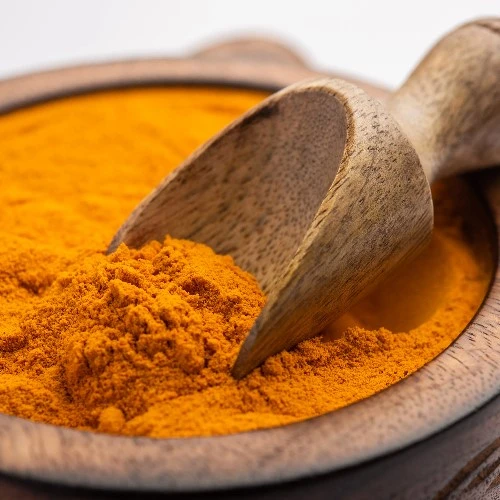
Curcumin is the most prominent and best-known curcuminoid in turmeric, making up about 2-8% of the total weight of turmeric powder. It is the compound responsible for much of turmeric's distinctive yellow color and flavor. Known for its potent anti-inflammatory, antioxidant, and anti-cancer properties, curcumin has been the subject of extensive scientific research. As an isolated compound, curcumin is often used in studies to understand its mechanisms of action and therapeutic applications.
While curcumin is a powerful compound, it is only one part of the whole plant. In its isolated form, curcumin's bioavailability can be limited, meaning that the body doesn't always absorb or utilize it efficiently. To address this issue, curcumin is often paired with other compounds, such as black pepper extract (piperine), to enhance absorption.
Other Curcuminoids in Turmeric
In addition to curcumin, turmeric root extract contains other curcuminoids like demethoxycurcumin and bisdemethoxycurcumin. These compounds, though less studied than curcumin, also have anti-inflammatory, antioxidant, and antibacterial properties. Together, they contribute to the synergistic effect of turmeric, supporting a variety of health benefits beyond what curcumin alone can offer. This diversity of curcuminoids makes turmeric root extract a broad-spectrum remedy for a wide range of ailments.
Properties and Functions: A Golden Array of Benefits
Both turmeric root extract and curcumin boast an impressive range of properties that contribute to their health-promoting effects. However, their functions can differ slightly due to their composition.
Turmeric root extract, with its full spectrum of compounds, offers a broad range of benefits. It's known for its:
- Anti-inflammatory properties
- Antioxidant effects
- Antimicrobial activity
- Potential to support digestive health
- Possible benefits for skin health
Research has shown that the various components in turmeric root extract work synergistically, potentially enhancing its overall effects. For instance, a study found that all eight components of turmeric, including curcumin, contributed to its antifungal activity, with their combined effect being stronger than any individual compound.
Curcumin, as the most studied component of turmeric, has been the focus of numerous scientific investigations. Its properties include:
- Potent anti-inflammatory effects
- Strong antioxidant activity
- Potential to support joint health
- Possible benefits for heart health
- Potential neuroprotective properties
Curcumin's anti-inflammatory effects are particularly noteworthy. It has been shown to inhibit various molecules involved in inflammation, such as NF-κB, a protein complex that plays a crucial role in inflammation. This makes curcumin a subject of interest in research on various inflammatory conditions.
While both turmeric root extract and curcumin offer health benefits, it's important to note that curcumin is often poorly absorbed by the body. This is where the other compounds in turmeric root extract may play a role, potentially enhancing curcumin's bioavailability.
Applications: From Ancient Wisdom to Modern Wellness
The applications of turmeric root extract and curcumin span a wide range of fields, from traditional medicine to modern nutraceuticals and even cosmetics.
Turmeric root extract finds applications in:
- Dietary supplements: Often used to support overall health and wellness
- Culinary uses: As a spice in various cuisines, particularly in South Asian dishes
- Natural food coloring: Providing a vibrant yellow hue to foods and beverages
- Skincare products: Used in creams and masks for its potential skin benefits
- Traditional medicine: Used in Ayurvedic and Chinese medicine for various ailments
The versatility of turmeric root extract comes from its complex composition, offering a holistic approach to health and wellness. Its use in traditional medicine systems dates back thousands of years, testament to its enduring popularity.
Curcumin powder, with its more concentrated and studied effects, is often used in:
- Targeted dietary supplements: Particularly for inflammation and joint health
- Pharmaceutical research: Studied for potential therapeutic applications
- Functional foods: Added to foods and beverages for health benefits
- Sports nutrition: Used by athletes for its potential anti-inflammatory effects
- Cosmetic formulations: Incorporated into skincare products for its antioxidant properties
The applications of curcumin continue to expand as research uncovers new potential benefits. For instance, recent studies have explored its possible role in supporting cognitive function and mental health.
It's worth noting that while curcumin is often used in isolated form, there's growing interest in using it alongside other turmeric compounds. This approach, known as full-spectrum or whole-herb supplementation, aims to harness the synergistic effects of turmeric's various components.
Curcumin Powder Supplier
Are you on the lookout for high-quality natural ingredients? Look no further! Le-Nutra is your go-to partner. With a decade of experience in the natural ingredients industry, we have honed our expertise and built a reputation for excellence. Our star product, turmeric extract curcumin, is sourced from the finest Curcuma longa L. and meets the stringent USP 95% specification. Whether you're in the health supplement, food, or cosmetic industry, our product can add value to your offerings. Don't miss out on this opportunity to enhance your product line with a top-notch ingredient. Reach out to us today at info@lenutra.com and let's start a successful collaboration.
References:
- Prasad S, Aggarwal BB. Turmeric, the Golden Spice: From Traditional Medicine to Modern Medicine. In: Benzie IFF, Wachtel-Galor S, editors. Herbal Medicine: Biomolecular and Clinical Aspects. 2nd edition. Boca Raton (FL): CRC Press/Taylor & Francis; 2011. Chapter 13.
- Hewlings SJ, Kalman DS. Curcumin: A Review of Its Effects on Human Health. Foods. 2017;6(10):92.
- Priyadarsini KI. The chemistry of curcumin: from extraction to therapeutic agent. Molecules. 2014;19(12):20091-20112.
- Khalil OAK, de Faria Oliveira OMM, Vellosa JCR, et al. Curcuma longa L. extract and curcumin: resistance of antifungal activity against Candida species. Int J Pharm Pharm Sci. 2012;4(Suppl 3):228-231.
- He Y, Yue Y, Zheng X, Zhang K, Chen S, Du Z. Curcumin, inflammation, and chronic diseases: how are they linked? Molecules. 2015;20(5):9183-9213.







